Read media, fonts and stylesheets
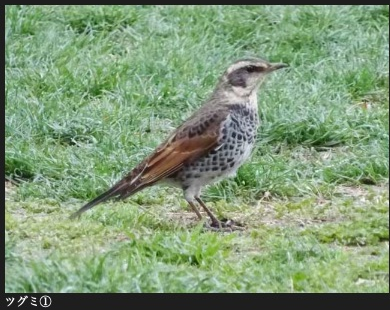
大辞泉 includes a photograph in its 鶫 article.
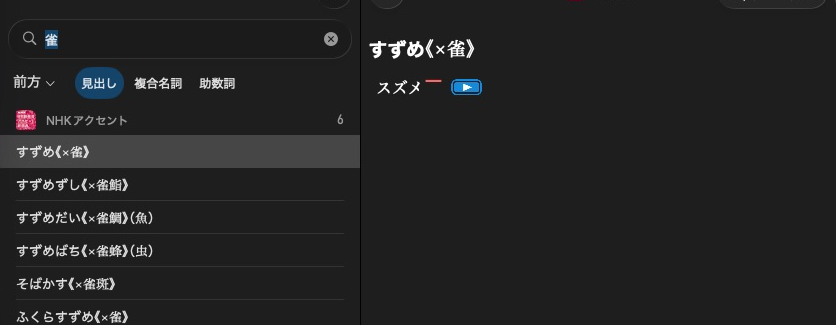
NHKアクセント provides a playback control beside the pronunciation of すずめ.
Use the dictionary opened in Open a dictionary.
Read graphics and audio
if dictionary.graphics is not None:
    graphics = dictionary.graphics
    name = graphics.id_at(0)
    data = graphics.get(name)

if dictionary.audio is not None:
    for clip in dictionary.audio:
        print(clip.id, len(clip.data))
if (const auto* graphics = dictionary->graphics()) {
    for (size_t i = 0; i < graphics->size(); ++i) {
        auto name = graphics->idAt(i).value();
        auto data = graphics->get(name).value();
    }
}
if (const auto* audio = dictionary->audio()) {
    std::visit([](const auto& store) {
        for (auto item : store.items()) {
            auto data = item.value().data;
        }
    }, *audio);
}
Graphics have string IDs. Audio may have string IDs or numeric IDs in legacy
stores. Both Python store types use the same sequence and get(id) interface.
Absent stores are null pointers / None.
For a known content-relative path, use resource("gaiji/rare.svg") or
resource("graphics/bird.svg"). This also maps loose assets. It is not a recursive
file listing and does not resolve numeric legacy audio IDs.
Read fonts and stylesheets
for font in dictionary.fonts:
    font.write_to(output_directory / font.filename)

if dictionary.stylesheet is not None:
    text = dictionary.stylesheet.data
for (const auto& font : dictionary->fonts())
    font.writeTo(outputDirectory / font.filename()).value();
if (const auto* css = dictionary->stylesheet()) {
    auto text = css->data();
}
A font can be an ordinary mapped file or several packed fragments. Opening
identifies its format and resolves filename() / filename,
including .ttf, .otf or .ttc. name() / name is the resource name without
that extension.
Path writes stream the fragments, return the byte count and refuse existing files. The output directory must already exist. Partial new files are removed if writing fails. To use an already open Python file, retain direct buffer access:
with open(output_directory / font.filename, "wb") as output:
    for fragment in font:
        output.write(fragment)
The C++ stream overload and fragments() remain available. Both approaches avoid
assembling a contiguous font buffer. Night-mode CSS is available through
nightmodeStylesheet() / nightmode_stylesheet.
Next: Browse native indexes.